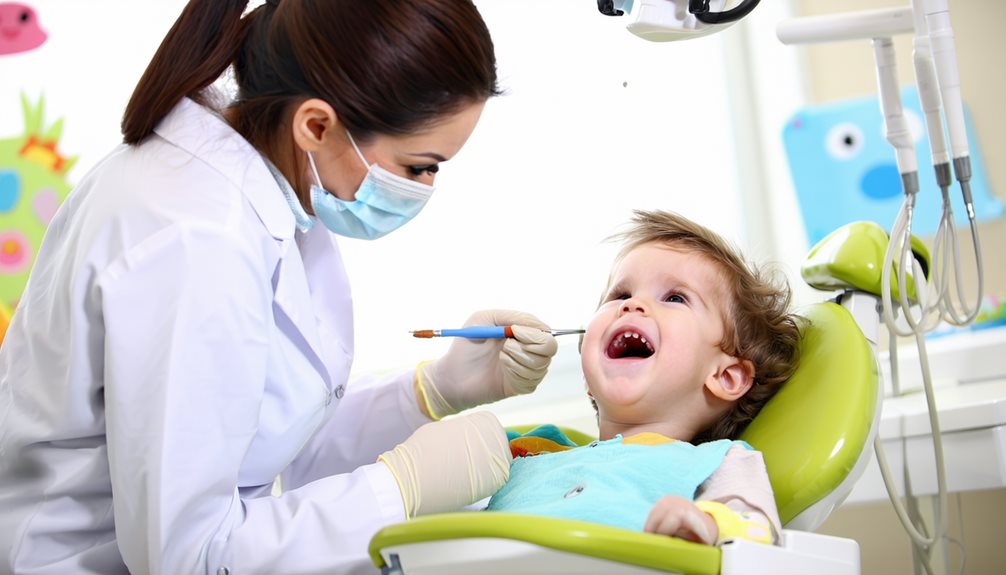
Pediatric dentists advocate for a holistic strategy to prevent cavities, emphasizing regular dental check-ups for early cavity detection and personalized oral care advice. Fluoride treatments are recommended to strengthen enamel and aid in early cavity repair. Dental sealants provide a protective barrier, particularly beneficial for young teeth. A nutritious diet rich in fruits, vegetables, and calcium-rich foods along with limiting sugary snacks is essential. Proper brushing with fluoride toothpaste twice daily and using soft-bristled brushes are also fundamental practices. Mindful sugar intake and timing further reduce decay risk. Adopting these practices fosters enduring oral health and wellness insight.
Importance of Regular Check-Ups
Regular dental check-ups play an important role in maintaining oral health and preventing cavities. These routine visits offer numerous check-up benefits, serving as a proactive measure to safeguard against dental issues before they develop into more significant problems. By prioritizing regular appointments, patients can confirm that their oral hygiene is consistently monitored and maintained at an ideal level.
During a check-up, dental professionals conduct thorough examinations, identifying early signs of cavities and other potential oral health concerns. This early detection is vital, as it allows for timely intervention and treatment, minimizing the need for more invasive procedures in the future.
Additionally, dental check-ups provide an opportunity for personalized oral hygiene advice, tailored to meet the unique needs of each patient. This guidance can inspire innovative approaches to maintaining oral health, empowering individuals to incorporate new techniques and products into their daily routines.
In addition to preventive care, regular check-ups foster a collaborative relationship between the dentist and the patient. This partnership encourages open communication and enables patients to express concerns, discuss innovative oral care strategies, and gain a deeper understanding of their own oral health.
Ultimately, the importance of regular dental check-ups cannot be overstated in the pursuit of lasting oral health and cavity prevention.
Fluoride Treatments Benefits
Enhancing dental health through fluoride treatments offers a significant advantage in the fight against cavities. As an essential part of preventive dentistry, fluoride applications are designed to bolster the strength of tooth enamel, creating a formidable barrier against decay.
By incorporating these treatments into regular dental care routines, patients can benefit from a proactive approach that targets the root causes of cavities, rather than merely addressing symptoms after they arise.
Fluoride, a naturally occurring mineral, plays a vital role in enamel strengthening by promoting remineralization. This process helps repair early-stage cavities even before they become visible, offering a forward-thinking solution that aligns with modern desires for innovative healthcare.
Additionally, fluoride applications are particularly effective for children whose developing teeth are more susceptible to decay, ensuring their dental health is safeguarded during essential growth years.
For families seeking cutting-edge preventive care, fluoride treatments provide a simple yet powerful method to enhance oral hygiene. Available in various forms, such as gels, foams, and varnishes, these applications can be tailored to individual needs and preferences.
Dental Sealants Effectiveness
Dental sealants are a highly effective preventive measure against cavities, particularly for children and adolescents, as they act as a barrier protecting vulnerable surfaces of the teeth from decay.
The application process is straightforward and painless, involving the coating of the chewing surfaces with a thin plastic material that bonds quickly to the enamel.
With proper care, dental sealants can last several years, contributing considerably to long-term oral health.
Benefits of Dental Sealants
Protective measures in oral health are essential in maintaining cavity-free teeth, and dental sealants stand out as a highly effective preventive option. Dental sealants act as a formidable barrier against decay, particularly on the occlusal surfaces of molars, where pits and fissures are most prevalent. These tiny grooves are vulnerable to plaque accumulation, making them prime targets for cavities.
By utilizing advanced sealant materials, such as resin-based composites, dentists can effectively shield these areas, greatly lowering the risk of tooth decay.
The application techniques involved in placing dental sealants are both innovative and minimally invasive. Pediatric dentists carefully apply a thin, protective coating over the chewing surfaces of teeth. This process requires precision to guarantee complete coverage and durability, enhancing the sealant’s long-term effectiveness.
Once applied, the sealants bond quickly to the tooth enamel, providing immediate protection.
Moreover, dental sealants offer lasting benefits, often safeguarding teeth for several years before reapplication might be necessary. This long-term protection makes them an ideal choice for children and adolescents, who are more prone to cavity formation.
As parents and caregivers seek modern solutions to dental health, sealants present a proactive approach to preventing cavities and promoting lifelong oral wellness.
Sealant Application Process
As we consider the effectiveness of dental sealants, understanding the application process becomes key to appreciating their role in cavity prevention.
Dental sealants act as a protective shield over the enamel, safeguarding vulnerable areas from decay. The sealant materials, typically made of a durable plastic resin, are chosen for their ability to adhere to the tooth surface, creating a barrier against food particles and bacteria.
The application techniques for dental sealants are meticulously designed to maximize their protective benefits. The process begins with a thorough cleaning of the tooth to remove plaque and debris.
Next, an etching solution is applied to slightly roughen the tooth surface, enhancing the bond between the tooth and the sealant material. This is followed by the precise application of the sealant itself, which is carefully painted onto the tooth, targeting the grooves and pits where cavities are most likely to form.
The sealant is then hardened using a special curing light, ensuring a robust and lasting adhesion.
Longevity of Sealants
The longevity of dental sealants is an essential factor in their effectiveness as a cavity-prevention strategy. These protective coatings, applied to the chewing surfaces of molars, act as a barrier against plaque and acids, greatly reducing the risk of decay. The sealant lifespan typically ranges from five to ten years, although this can vary based on factors such as the patient’s oral hygiene habits and dietary choices.
Continuous advancements in dental materials aim to enhance sealant durability, offering innovative solutions for extended protection.
To maximize the sealant lifespan, regular dental check-ups are key. Dentists assess the condition of the sealants and address any maintenance requirements, such as resealing areas where the coating has worn away. This proactive approach guarantees that the sealants retain their protective capabilities.
Additionally, adherence to good oral hygiene practices, including brushing and flossing, supports the longevity of the sealants by minimizing plaque accumulation.
For those seeking innovative cavity-prevention methods, dental sealants present a compelling option. By understanding the importance of sealant lifespan and maintenance requirements, patients can make informed decisions to safeguard their oral health, empowering them to embrace a future with fewer cavities and healthier smiles.
Nutrition Tips for Healthy Teeth
Proper nutrition plays an essential role in maintaining oral health, serving as a foundational element in cavity prevention. Pediatric dentists emphasize the importance of incorporating healthy snacks and calcium sources into children’s diets to support strong, cavity-resistant teeth.
Healthy snacks such as fresh fruits, vegetables, nuts, and cheese provide essential nutrients without the high sugar content that can contribute to tooth decay. Innovative options like yogurt smoothies or whole grain crackers with hummus can also offer enjoyable alternatives to sugary treats.
Calcium is an important mineral for developing robust teeth and bones.
Ensuring that children receive adequate calcium intake can be achieved by including dairy products like milk, cheese, and yogurt in their diet.For those seeking non-dairy calcium sources, options such as fortified plant-based milks, tofu, almonds, and leafy greens should not be overlooked. These choices can effectively contribute to the recommended daily calcium intake, fostering healthy teeth development.
Furthermore, maintaining balanced meals with a good mix of proteins, carbohydrates, and fats supports overall oral health. Encouraging children to drink water, particularly fluoridated tap water, instead of sugary beverages can greatly reduce the risk of cavities.
With thoughtful nutrition strategies, parents can help lay the groundwork for a lifetime of healthy teeth.
Proper Brushing Techniques
Building on the foundation of nutrition for oral health, effective brushing techniques are another cornerstone in preventing cavities. Pediatric dentists emphasize the importance of brushing frequency, advocating for children to brush at least twice daily. This routine guarantees the removal of plaque and food particles that can lead to tooth decay.
An innovative approach is to integrate brushing into a child’s morning and bedtime rituals, making it a consistent and enjoyable habit.
Toothpaste selection is equally essential in cavity prevention. For children, using a fluoride toothpaste is recommended, as fluoride strengthens enamel and offers protection against cavities. However, the amount of toothpaste should be age-appropriate—a smear for toddlers under three and a pea-sized amount for those aged three to six—guaranteeing safety and efficacy.
Parents are encouraged to supervise their children’s brushing until they demonstrate proper technique, which includes using a circular motion and covering all tooth surfaces. Additionally, using a soft-bristled toothbrush can prevent gum irritation and be more comfortable for young users.
Managing Sugar Intake
Understanding the impact of sugar consumption on dental health is fundamental in preventing cavities. The frequency and quantity of sugar intake play a vital role in oral health, as sugars provide a fertile environment for harmful bacteria that cause tooth decay.
To innovate cavity prevention strategies, pediatric dentists recommend exploring sugar alternatives such as xylitol or stevia. These alternatives not only mimic the sweetness of sugar but also reduce the risk of cavities, as they do not contribute to the acidic environment in which harmful bacteria thrive.
In addition to substituting sugar, attention to snack timing is essential. Consuming sugary snacks or beverages throughout the day can result in prolonged acid attacks on tooth enamel. Dentists advise allowing time between meals and snacks to enable saliva to neutralize acids and repair enamel.
Encouraging children to consume sweets as part of meals rather than between them can considerably minimize cavity risk.
Parents are encouraged to foster mindful eating habits and incorporate innovative sugar alternatives into their children’s diets. By being strategic about snack timing and sugar consumption, families can greatly contribute to better oral health outcomes and reduce the incidence of cavities.
Frequently Asked Questions
At What Age Should Children Start Visiting a Dentist?
Pediatric dental care experts advocate for a child’s first dental visit by age one or within six months of the first tooth eruption. Early visits foster innovative prevention strategies and establish a foundation for lifelong oral health.
Are Electric Toothbrushes Better for Children Than Manual Ones?
Electric toothbrushes offer benefits such as enhanced plaque removal and ease of use for children. However, manual brushing techniques remain effective if performed correctly. Both options are valuable, yet electric toothbrushes may encourage consistent and innovative oral hygiene habits.
How Often Should Children Replace Their Toothbrushes?
Children should replace their toothbrushes every three months to maintain ideal oral hygiene. Ensuring proper toothbrush storage, such as keeping it upright and allowing air drying, can help extend its lifespan and prevent bacterial growth.
Is Mouthwash Safe for Children to Use?
The safety of mouthwash for children depends on its ingredients. Alcohol-free formulations are recommended. Mouthwash benefits include reduced plaque and fresh breath. Supervised use guarantees proper dosage, enhancing oral hygiene without the risk of swallowing harmful substances.
What Are the Signs That a Child Might Have a Cavity?
Cavity symptoms in children often include dental discomfort, such as sensitivity to hot or cold foods, visible pits or dark spots on teeth, and complaints of pain while chewing. Early detection and innovative treatments can mitigate further dental issues.
Conclusion
Regular dental check-ups, fluoride treatments, and dental sealants are vital components in preventing cavities in children. A balanced diet rich in necessary nutrients further supports oral health, while proper brushing techniques enhance the effectiveness of these preventive measures. Managing sugar intake is essential to minimize the risk of tooth decay. By integrating these strategies, pediatric dental health can be greatly improved, fostering a foundation for lifelong oral hygiene and reducing the incidence of cavities in the pediatric population.