
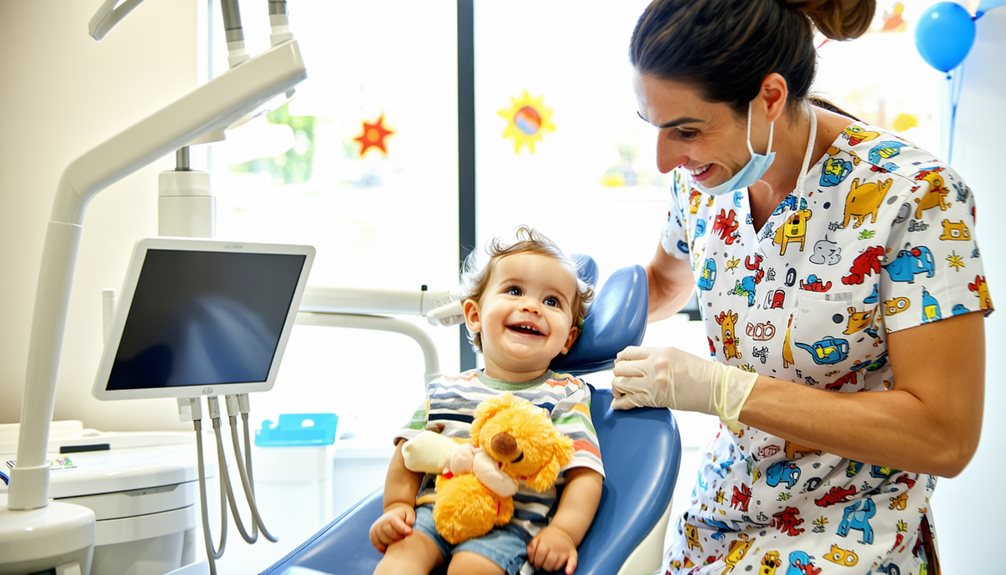
Choosing the best dentist for anxious kids can transform their dental experience from nerve-wracking to enjoyable. Such dentists, equipped with specialized pediatric training, use gentle communication and engaging techniques like storytelling to soothe fears. A child-friendly environment with playful decor and digital games makes visits less intimidating. Advanced technology offers more comfortable procedures, alleviating concerns about pain or strange noises. Personalized strategies, including rewards and calming activities, build confidence and trust in dental care, fostering lifelong healthy habits. Discover more about creating a positive and supportive dental journey for your child, making each visit a friendly adventure.
Understanding Dental Anxiety
Many children experience some level of anxiety when visiting the dentist, and understanding this common fear is essential for parents and caregivers.
Dental fear can manifest in various ways, such as crying, refusal to cooperate, or physical symptoms like a stomachache. Recognizing these signs is the first step in providing effective emotional support. Children often fear the unknown, strange sounds, or perceived pain, making the dental clinic an intimidating place.
As caregivers, it’s vital to empathize with these feelings and develop strategies that alleviate this anxiety. Introducing a child to dental care through stories, toys, or even fun videos can help them feel more comfortable with the concept of dental visits.
Encouraging open conversations about their fears allows children to express themselves and feel understood. By maintaining a calm and reassuring demeanor, caregivers can instill a sense of security and trust.
Incorporating innovative techniques, such as virtual reality tours of the dental office or playful interactions with dental tools, can also transform the experience into a fun adventure.
Specialized Pediatric Training
Dentists with specialized pediatric training are well-equipped to understand the unique needs of children, especially those who may feel anxious about dental visits.
Using child-friendly techniques and creative strategies, these professionals aim to make each appointment a positive experience.
Child-Friendly Dental Techniques
For parents seeking the best dental care for their anxious children, a dentist with specialized pediatric training can make all the difference. Such dentists are adept at using innovative, child-friendly techniques designed to create a comforting dental experience. They understand that playful distractions and gentle communication are key elements in putting young patients at ease.
These professionals often incorporate colorful tools and engaging visuals to transform dental visits into adventures rather than ordeals. This approach not only helps to reduce fear but also encourages a positive attitude towards oral hygiene from an early age.
Child-friendly dental techniques go beyond traditional methods, focusing on creating an environment where children feel comfortable and understood. Dentists with this specialized training know how to speak to children on their level, using language that is both soothing and easy to understand.
They employ techniques such as storytelling and visual aids to explain procedures, making the unknown seem less intimidating. Additionally, they are skilled in using non-verbal cues to build trust, guaranteeing that children feel safe and respected.
Anxiety-Reducing Strategies
In the domain of pediatric dentistry, anxiety-reducing strategies are paramount to ensuring a pleasant experience for young patients. Specialized pediatric training equips dentists with innovative techniques to transform a potentially intimidating visit into a delightful adventure.
A key strategy involves playful distractions, where children are engaged with colorful toys, interactive games, or enchanting stories that whisk their minds away from any dental fears. This imaginative approach not only makes the environment more enjoyable but also helps children associate dental visits with positive and fun experiences.
Gentle communication is another fundamental strategy in pediatric dentistry. Dentists skilled in this area use a soothing tone and simple, child-friendly language to explain procedures, ensuring young patients feel heard and understood.
This empathetic dialogue fosters trust and helps alleviate anxiety, making children feel more comfortable and cooperative during their visits.
Child-Friendly Environment
Creating a welcoming and engaging environment can greatly ease a child’s dental anxiety. For many children, visiting the dentist can be intimidating. However, a child-friendly setting, infused with playful decor and interactive activities, can transform this experience into a positive adventure. Bright colors, cheerful murals, and themed rooms captivate young imaginations, making the dentist’s office less intimidating and more inviting.
These innovative touches can distract children from their fears, turning their focus to exploration and fun. Moreover, interactive activities such as engaging digital games, educational touch screens, and hands-on exhibits can stimulate curiosity and learning. These features not only entertain but also educate children about oral health in an enjoyable way.
By incorporating these elements, dentists create a dynamic space that fosters a sense of wonder and comfort. Empathetically designed environments signal to children that their feelings and experiences are valued. This thoughtful approach acknowledges their apprehensions and provides reassurance.
Tailored Anxiety Management
When it comes to helping kids feel comfortable at the dentist, tailored anxiety management can make a big difference.
Personalized coping techniques and child-centered relaxation strategies create a supportive environment where children learn to manage their fears in a way that suits them best.
Personalized Coping Techniques
For children who experience anxiety about visiting the dentist, personalized coping techniques can make a significant difference in their comfort and confidence. By crafting individualized approaches, dentists can transform a potentially intimidating experience into a more manageable and even enjoyable one.
One innovative strategy involves playful distractions, which can redirect a child’s focus away from their fears. This might include engaging with interactive games, watching favorite cartoons, or listening to calming music during the appointment. Such distractions not only entertain but also ease the child’s mind, making the dental visit seem less overwhelming.
Equally important is the use of positive reinforcement to build confidence and trust. When dentists acknowledge a child’s bravery with praise or small rewards, it encourages a positive association with dental visits.
Personalized coping techniques like these are essential for helping children embrace dental care positively. By tailoring strategies to the unique needs of each child, dentists can guarantee that their young patients feel understood, respected, and empowered, paving the way for a healthier relationship with oral health care.
Child-Centered Relaxation Strategies
A warm smile and a gentle touch can be powerful tools in child-centered relaxation strategies, especially for managing dental anxiety. Innovative approaches focus on making the dental environment welcoming and stress-free. By harnessing playful distractions and positive reinforcement, a skilled dentist can transform a child’s experience from intimidating to delightful.
Here are four strategies that exemplify this approach:
-
Playful Distractions: Introducing engaging toys, interactive games, or colorful visuals diverts attention away from any fear-inducing procedures. These distractions can be as simple as virtual reality headsets or animated cartoons, ensuring a fun-filled visit.
-
Positive Reinforcement: Praising children for their bravery and cooperation can greatly bolster their confidence. Reward systems, such as stickers or small toys, encourage a positive association with dental visits.
-
Storytelling: Narratives can be woven into the dental experience, transforming it into an adventure. Children might imagine themselves as superheroes on a mission, making the process exciting and less intimidating.
-
Deep Breathing Exercises: Teaching children simple breathing techniques can empower them to manage their anxiety. This not only calms nerves but also instills a sense of control and independence.
These child-centered strategies are essential in fostering a positive dental experience, paving the way for lifelong healthy habits.
Advanced Technology Use
Modern dentistry offers a range of advanced technologies that can greatly benefit anxious children during dental visits. Digital innovations have reshaped the way dental care is delivered, allowing kids to experience treatments that are both efficient and gentle.
For instance, digital X-rays are faster and more comfortable than traditional methods, reducing the time children need to spend in the dental chair. This quick process helps ease anxiety while ensuring a more accurate diagnosis.
Another remarkable development is the use of laser dental tools. These high-tech instruments can perform procedures with minimal discomfort and noise, which is often a significant source of fear for young patients.
Lasers can also reduce the need for traditional drills, leading to a more pleasant experience for your child.
Moreover, intraoral cameras are small, wand-like devices that allow dentists to show children real-time images of their teeth. This interactive approach turns a routine check-up into an educational adventure, enhancing a child’s understanding and reducing fear of the unknown.
Building Trust and Comfort
While advanced technology can make dental visits more comfortable, building trust and comfort with your child’s dentist is equally important. Trust building and comfort creation are essential components for ensuring a positive dental experience, particularly for anxious kids.
A skilled pediatric dentist knows how to engage and reassure children, transforming what could be an intimidating visit into an enjoyable adventure.
Here are some innovative strategies dentists use to build trust and comfort:
-
Interactive Communication: Dentists often use child-friendly language and explanations. By involving kids in the process and explaining each step in a fun and engaging way, trust is established, and fears are reduced.
-
Personalized Care: Recognizing each child’s unique needs and preferences, dentists tailor their approach. This personalized attention helps in comfort creation, making young patients feel special and understood.
-
Positive Reinforcement: Praising children for their bravery during dental visits is a powerful trust-building tool. It encourages them to associate dental care with positive experiences.
-
Innovative Tools and Techniques: Using colorful dental instruments or animated videos can distract and entertain kids, turning anxiety into curiosity and excitement.
Frequently Asked Questions
How Can Parents Prepare Their Child for a Dental Visit?
Parents can prepare their child for a dental visit by employing positive reinforcement and visual aids. Encourage excitement through rewards and use engaging visuals to familiarize them with the dental environment, fostering a sense of curiosity and comfort.
What Qualifications Should a Pediatric Dentist Have?
Pediatric dentist qualifications include specialized dental education requirements, such as a dental degree followed by additional training in children’s oral health. This guarantees they understand kids’ unique needs, making dental visits comfortable and innovative for young patients.
Are There Specific Appointment Times Recommended for Anxious Children?
For anxious children, morning appointments are ideal as they experience less fatigue and stress. Additionally, weekend visits can provide a more relaxed atmosphere, reducing anxiety. These options can greatly enhance the overall dental experience for young patients.
How Often Should Anxious Kids Have Dental Check-Ups?
Regular dental check-ups, ideally every six months, can effectively manage anxiety in children. This dental frequency guarantees comfort and familiarity, encouraging innovative techniques in anxiety management, ultimately promoting positive dental experiences and healthy oral habits for young patients.
What Role Do Parents Play During a Child’s Dental Visit?
Parental involvement is essential during a child’s dental visit, providing emotional support that fosters a positive experience. Through innovative strategies, parents can help ease anxiety, making the visit more comfortable and encouraging good oral health habits.
Conclusion
Choosing the best dentist for anxious children is essential for fostering a positive dental experience. Understanding dental anxiety and employing specialized pediatric training guarantees that young patients receive appropriate care. A child-friendly environment, alongside tailored anxiety management techniques, helps in easing apprehensions. The use of advanced technology further enhances the comfort and efficiency of treatments. Ultimately, building trust and comfort with the dentist can lead to a lifetime of healthy dental habits and reduced anxiety.

